 |
OUR VISIONTo be the customers best choice Hotel in Abuja Nigeria.OUR MISSIONTo deliver quality services with Hospitality standards and best practice.OUR CORE VALUESCustomer satisfaction, Dedication, Excellence and Respect for people.BACKGROUND.ALGOS SUITES & HOTELS LIMITED is as one of the major hospitality providers in the Federal Capital Territory Abuja Nigeria, registered with Corporate Affairs Commission in 2011 with RC number 940704. At the time of incorporation, staff was in small number of ten as the strength running the hotel affairs. Today, the strength has incrementally grown to thirty Eight trained staff in different professions and backgrounds, who are never too busy to attend to people, answering questions as they are asked with high spirit, always wanting to proffer solutions beyond limits.ALGOS Hotel has grown big in size, meeting the challenges with capacity to provide quality services in housekeeping, waiter service, kitchen, security and maintenance services. Our services are to provide clean rooms, Halls for weddings, conference meetings, trainings, political and social engagements. Structurally, ALGOS has 76 rooms, 4-banquet Halls, Offices, Kitchen, storage facilities and 5 power generating sets to provide and guarantee 24-Hours electricity with high quality maintenance service delivery. Our security outfit has the capacity to monitor and subvert any eventuality within and outside the hotel premises. Our kitchen provides good food for guests. We are mobile, and always available to provide indoor-outdoor catering services. ALGOS Hotel is a business built on moral values and principles. Before her official lunch, the hotel ran on a pilot test with 22 guests accommodated at half price at the then room rates with free feeding. We treat our customers as our own family relations as they are the reason while we work and who we are today. Our hospitality business is registered with Nigeria Culture and Tourism board. Our pride is based on quality service to customer satisfaction. Our credit facility is designed to make our clients become partners in business. ALGOS is completed in ten bungalow style with 4-Prestige suites, 12-classic suites, 16-Business suites, 20-Royal suites, 16-Executive suites and 8-Standard suites. This give a total of 76rooms tastefully finished with good paintings, furnished with high class standards tiles and land scape with flowers and interlocks to pack 150 cars. Each banquet hall seat 500 people with good space for bar services and restaurant services. ALGOS hotel is distinctly located opposite the New Abuja Rail Way Terminal and adjacent to daughters of Charity Hospital Byazhin Road Kubwa Abuja. It is close to other Abuja Districts and municipal councils, for comforts and convenience for businesses/leisure activities. The Hotel is synonymous with service delivery for excellence. We have the ability to keep pace with new trends in hospitality industry which as a team can convert expectations in market forces into a collective but still individual guest satisfaction. Address: Kubawa, Abuja , Nigeria Reservation Line: 1-800-123-123 |
Saturday, 30 May 2015
ALGOS SUITES & HOTELS LIMITED, Byazhing Road Kubwa, Abuja, Nigeria Tel 0703 124 8748, 0909 764 2000

Ignobis Hotel Limited in Plot 147, Gado Nasko Road, (Phase4) deals in Accommodation, Banquet Halls. ... Address: Kubwa, Abuja, Nigeria. Tel: 0803. 311. 9099 Tel: 0802. 413. 1111
 |
Ignobis Hotel Limited in Plot 147, Gado Nasko Road, (Phase4)(A Reserved Place for Reserved Minds)deals in Accommodation, Banquet Halls. ... Address: Kubwa, Abuja, Nigeria.Tel: 0803. 311. 9099Tel: 0802. 413. 1111 |
The City of Abuja
 |
| Abuja
was selected as the new capital of Nigeria when it was obvious that
population pressures, political and ethic divisions necessitated a move
from Lagos. On February 4, 1976, a decree was signed establishing the
Federal Capital Territory of Abuja and setting up the Federal Capital
Development Authority (FCDA), the organisation charged with the task of
developing the new capital. Physically located in the centre of the
country and viewed as neutral both ethnically and religiously, it is
where culture and religion meet. The vehicle license plate for the FCT reads “Centre of Unity” a constant reminder that Abuja was selected in the hope of creating a united central city.”
The
FCT has borders on the north with Kaduna State, on south-east with
Nassarawa State, on the south-west by Kogi State and on the west by
Niger state.
As
a new capital, Abuja has the advantage of being well-planned over many
capital cities. Visitors and arriving residents will be greeted by wide,
well-designed and maintained roads and clean streets. Abuja also has
excellent access to the wider road network to the rest of the country.
It is built on a pre-Cambrian basement (granite) rock complex of
distinctive domes and hills, the most striking of which is called Aso
Rock.
|
The
1979 master plan called for Abuja to be developed in four phases. It
estimated a population of about 3 million by the year 2010 and a maximum
population of 4million well into the 21st century. Nearly
the entire Phase 1 development has been completed and it includes the
following: the Central Business District, the Three Arms Zone
(presidency, National Assembly and Supreme Court as well as the Maitama,
Wuse, Garki and Asokoro residential and business districts. The Phase 1
area of the city is divided into five (5) districts. They are the
Central, Asokoro, Garki, Wuse and Maitama. There are also five districts
in Phase 2. They are Kado, Durumi, Gudu, Utako and Jabi. And the Phase 3
districts are Mabuchi, Katampe, Wuye and Gwarimpa. There are also five
suburban districts, which are Gwagwalada, Kubwa, Nyanya, Karu and
Jukwoyi. Along the Airport Road on the approach to Abuja City are
satellite towns, namely Lugbe, Chika, Kuchigworo and Pyakassa. Other
satellite towns are Idu (the main industrial zone), Mpape, Karimu,
Gwagwa, Dei-Dei (housing the International Livestock market and also
International Building materials market).
Most of the diplomatic missions have relocated to Abuja from Lagos; some are using temporary buildings and residences while their permanent structures are being built. The Gwarinpa District, where many of the construction companies’ “Life Camps” are located, has also been developed but lies outside the Phase 1 area. Construction service companies and enterprises continues at a fast pace in Abuja and new places open weekly Phase 2, under development currently, involves the integration of the surrounding Katampe, Mabushi, Utako, Wuye, Durumi, Gudu. Jabbi, Duste and Gaduwa areas into the city. Phase 3 and 4 have not yet been fully planned.
Most of the diplomatic missions have relocated to Abuja from Lagos; some are using temporary buildings and residences while their permanent structures are being built. The Gwarinpa District, where many of the construction companies’ “Life Camps” are located, has also been developed but lies outside the Phase 1 area. Construction service companies and enterprises continues at a fast pace in Abuja and new places open weekly Phase 2, under development currently, involves the integration of the surrounding Katampe, Mabushi, Utako, Wuye, Durumi, Gudu. Jabbi, Duste and Gaduwa areas into the city. Phase 3 and 4 have not yet been fully planned.
Unfortunately,
due to rapid population growth, some of the initial facilities are now
being over stretched. The government is aware of this challenge and is
working to rectify the situation. The main source of water for Abuja is
the Usman Dam. The digital telecommunications system is maintained by
Nigeria Telecommunications Limited (NITEL). There is also a number of
privately owned satellite and mobile phone systems.
Abuja
is the headquarters of the Economic Community of West African States,
or ECOWAS. It also has the regional headquarters of OPEC.
Abuja City and the FCT have, and still is experiencing huge population growth; it has been reported that some areas around Abuja have been growing at 20 to 30% per year. There has been a prolific development of Squatter settlements and shanty towns on the city limits. Tens of thousands of people have been evicted since former FCT Minister Nasir El-Rufai started a campaign in 2003, aimed at bringing city development back in line with the original master plan.
Both international and domestic flights arrive at the Dr. Nnamdi Azikiwe International Airport. .
Abuja City and the FCT have, and still is experiencing huge population growth; it has been reported that some areas around Abuja have been growing at 20 to 30% per year. There has been a prolific development of Squatter settlements and shanty towns on the city limits. Tens of thousands of people have been evicted since former FCT Minister Nasir El-Rufai started a campaign in 2003, aimed at bringing city development back in line with the original master plan.
Both international and domestic flights arrive at the Dr. Nnamdi Azikiwe International Airport. .
History
The
land now called Abuja was originally the south-western part of the
ancient Habe (Hausa) kingdom of Zazzau (Zaria). It was populated fore
centuries by several semi-independent tribes. The largest of the tribes
was Gbagyi (Gwari), followed by the Koro and a few other smaller tribes.
In early 1800s when Zaria fell to Fulani invaders, Muhammed Makau, fled
south with some followers and his brothers- Abu Ja and Kwaka. Abu Ja
succeeded Makau in 1825.
The full name of the king was Abubakar; Abu was his nickname. By some accounts his fair complexion earned him the nickname “Ja” which means “red” or “fair-skinned” in Hausa. He became known as “Abu-Ja” meaning Abu the red” or “Abubakar the fair one “other sources say that the “Ja” is a shortened form of Ishaku Jatau, his father’s name. King Abubakar founded the kingdom of Abuja.
Abuja
became a major commercial centre where goods were exchanged by long
distance traders. The inhabitants successfully fought off the Fulani and
were not conquered as the neighbouring lands were.
In 1902, Abuja was occupied by the British colonial army. The British re organised the kingdoms and called them “emirates” which means “kingdoms” in Arabic. Until 1975, it remained a quiet part of Nigeria
The
problems associated with the capital being in Lagos, as mentioned
earlier, led to the search for a new capital that year. Abuja was
selected from amongst 33 possible sites. The criteria used for selection
included: centrality, healthy, climate, land availability and use,
water supply, multi-access possibilities, security , existence of
resources, drainage, good soil, physical planning convenience and ethnic
accord. The Emir of Abuja at the time, Altai Suleiman Bara, was asked
to meet with his Emirate Council to approve contributing four of the
five districts to Abuja to become the new capital. The council was
divided as some districts considered it too much of a sacrifice; but at
the end, they approved the request from the Federal Government. Thus,
the Abuja in Niger State contributed 80% of the land of the territory,
Plateau State (Now Nassarawa State) contributed 16 percent of the South
east territory and Kwara State (now Kogi State) contributed about four
percent of the south-west territory.
The
Emirate was then asked to give up the Abuja for the Federal Capital
Territory. Again the council was divided. In the end, they agreed
believing that the name of the emirate would become famous throughout
the world. The previous town of Abuja was renamed Suleja after the then
Emir of Suleiman Barau and “Ja” the last syllable of the first emir’s name.
Another interesting historical fact is that in the Gbagyi (or Gwan) language, the word “Aso means “success” or “victory”
According to tradition, the original inhabitants of the region lived at
the base of the rock for centuries without being conquered. The rock
was a refuge as well as mystical source strength. Asoro “(Aso Koro”) the name of the one of the local areas, therefore, means “people of victory.” In addition, the term “Aso Rock”
is increasingly being used to refer not only to the physical structure
of the most imposing rock in the area, but also as a symbol of
government power and a nation.
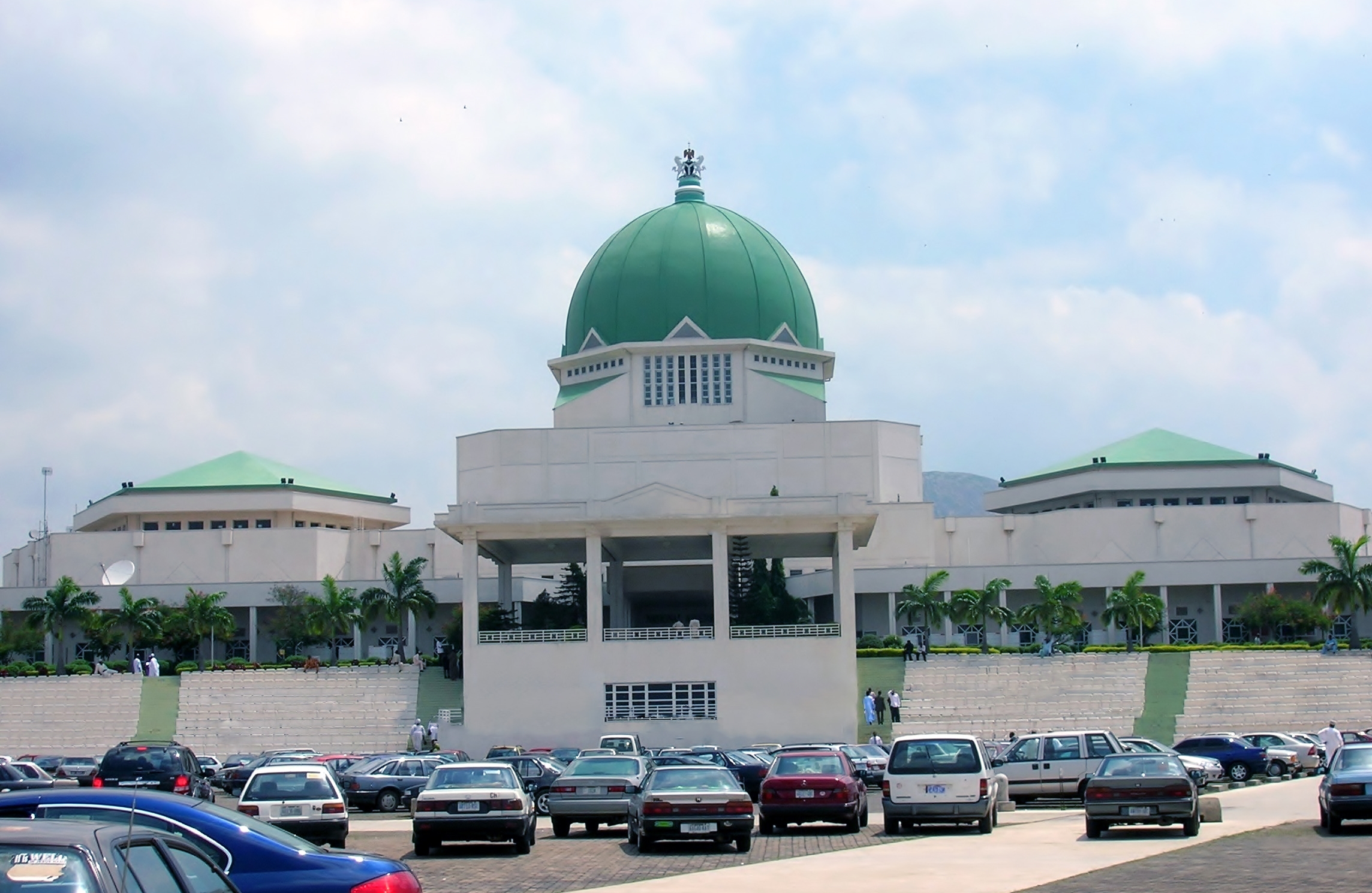
Abuja FCT Administration
There
are six Area Councils in the Federal Capital Territory, each subdivided
into words headed by local councils. The Minister of the Federal
Capital Territory is the overall leader and is appointed by the
President of Nigeria
The Three Arms Zone
The “Three Arms Zone”
or TAZ is fashioned after Capitol Hill in Washington D.C. where the U. S
Congress, the Supreme Court and the White House are within a short
distance of each other. In Abuja, the TAZ consists of the presidential
Villa, the National Assembly and the Supreme Court, all surrounded by a
ring road.
Subscribe to:
Comments (Atom)